
Last updated November 4, 2026
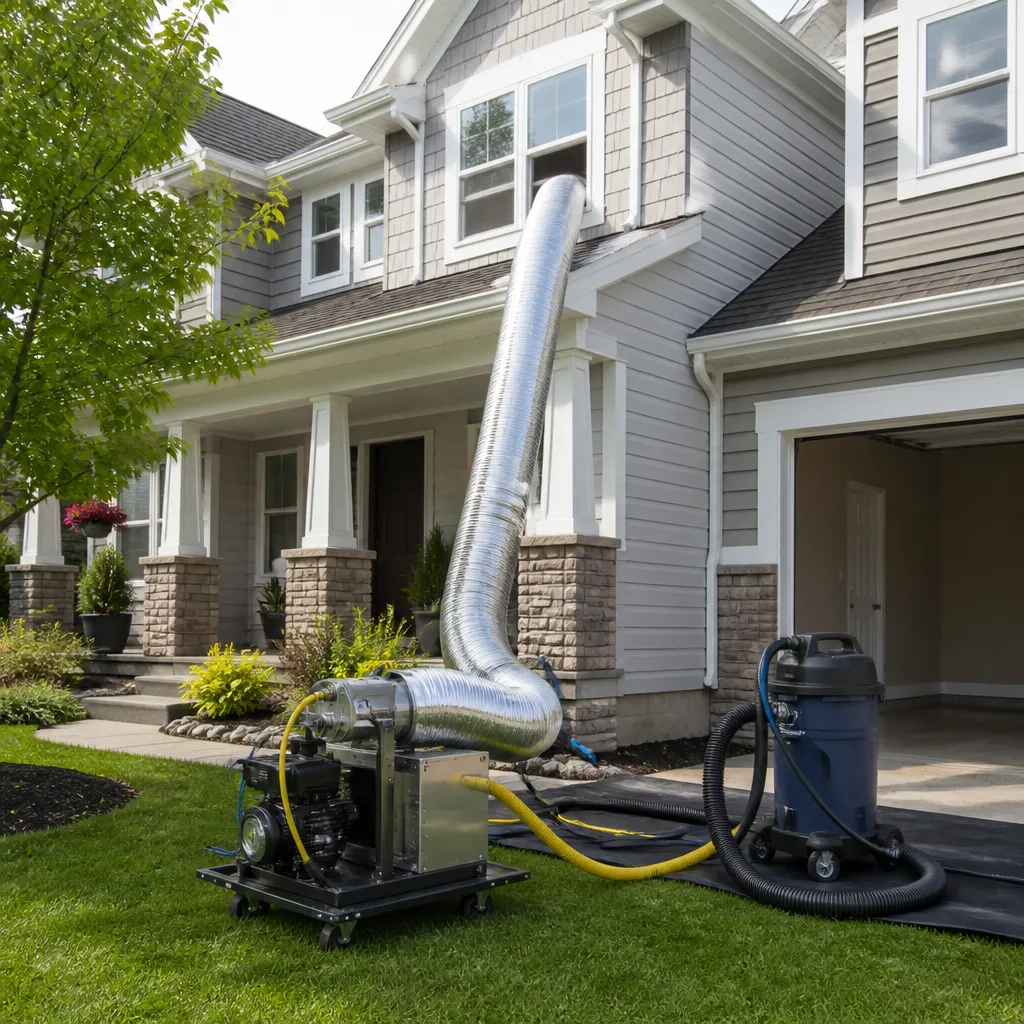 Whole-home duct cleaning
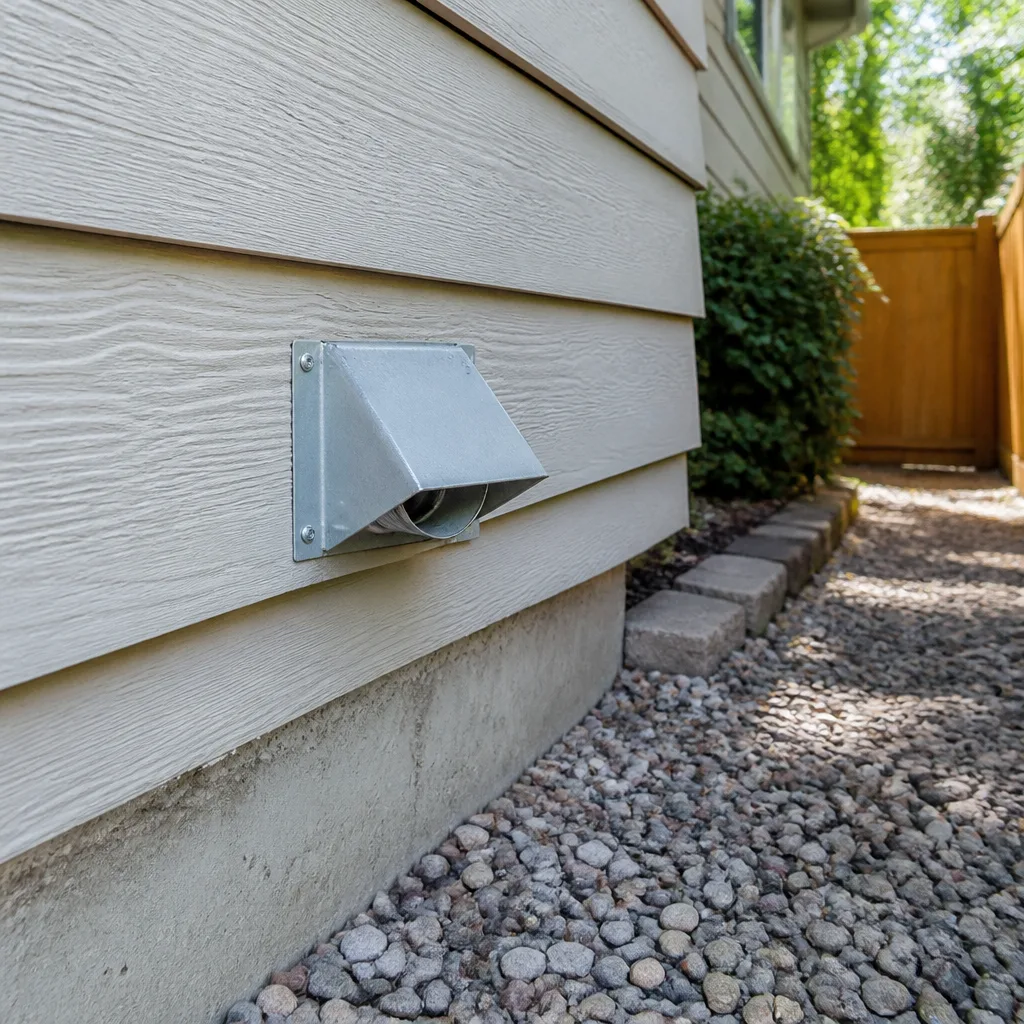 Dryer vent cleaning
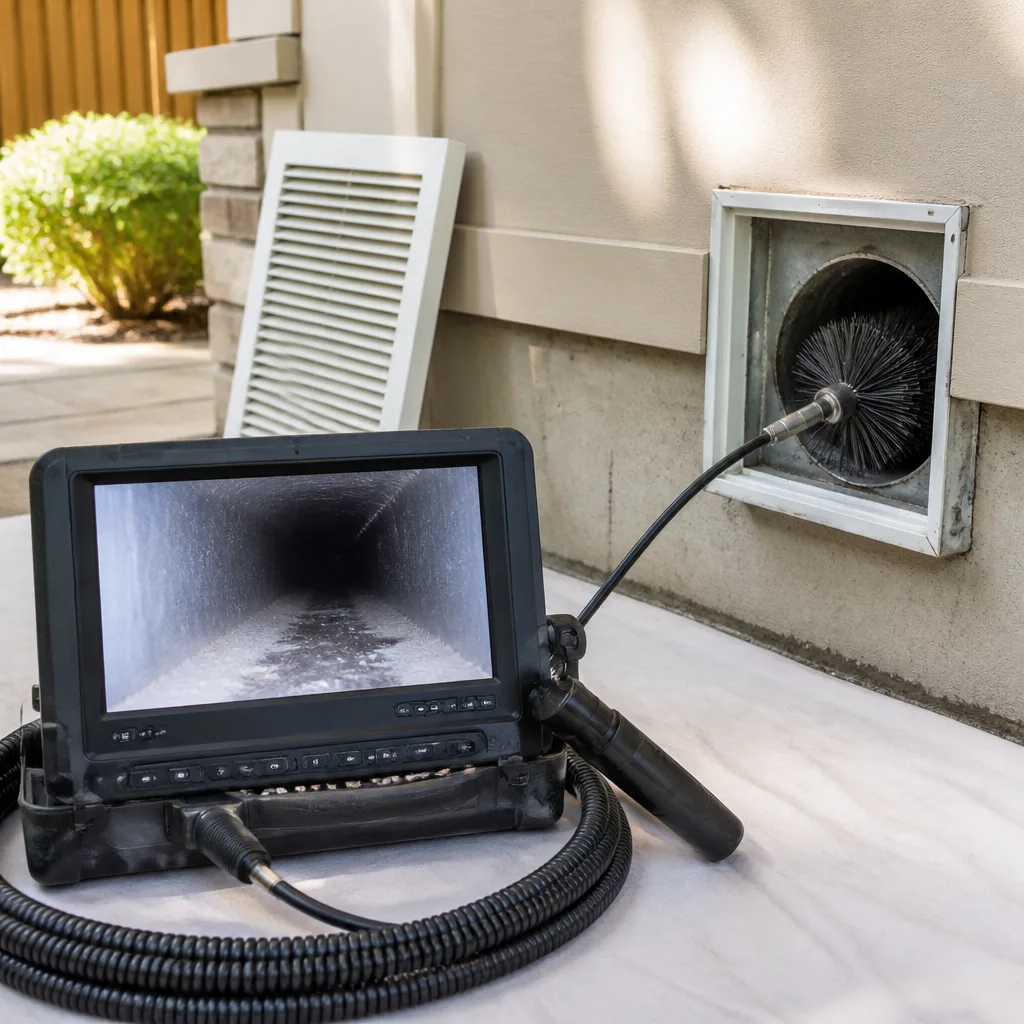 Camera inspection
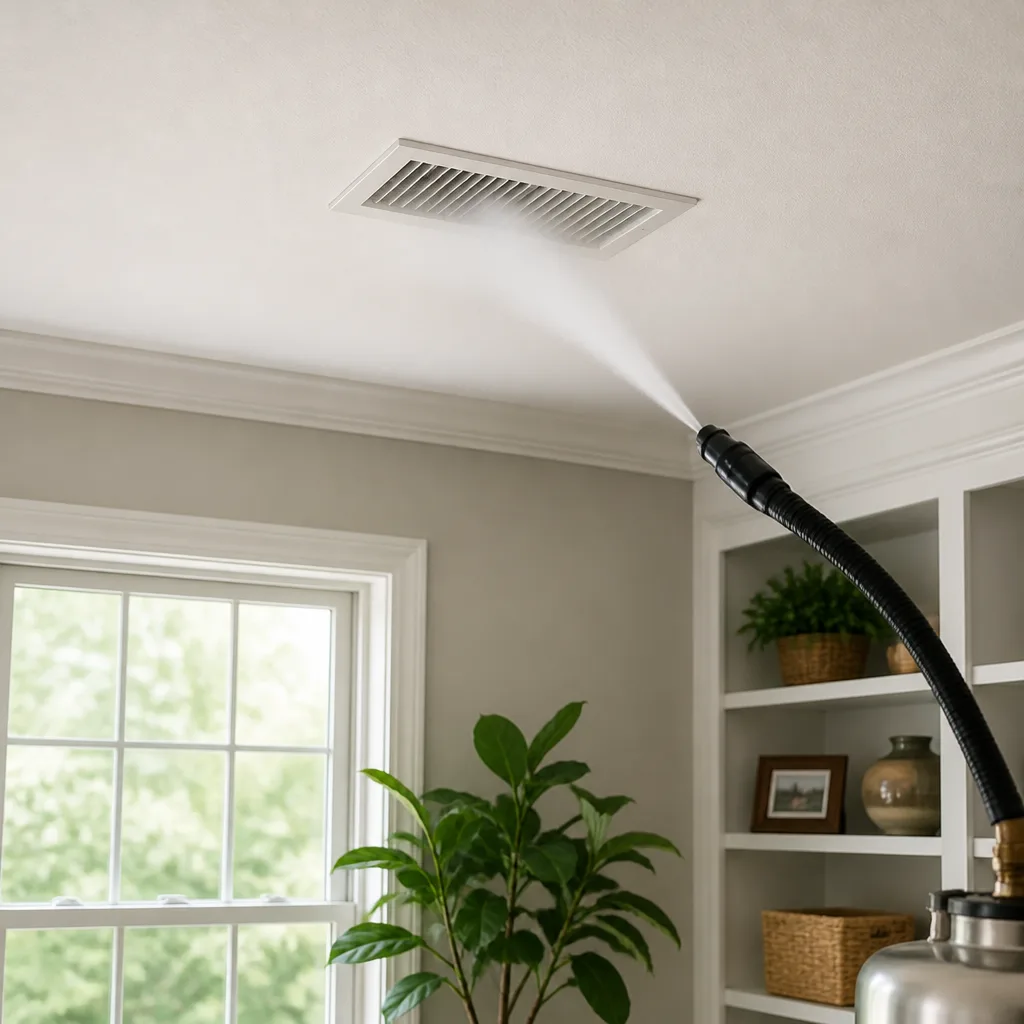 Sanitizing & deodorizing
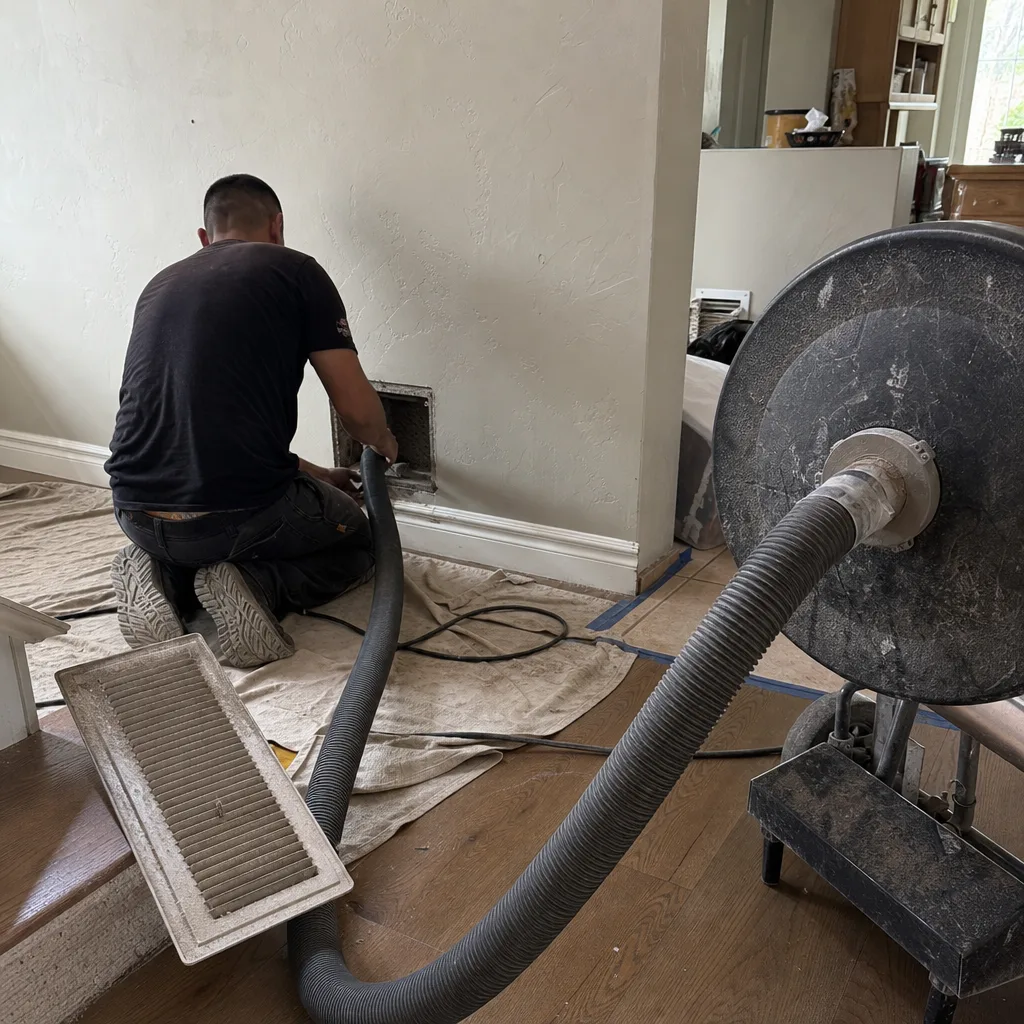
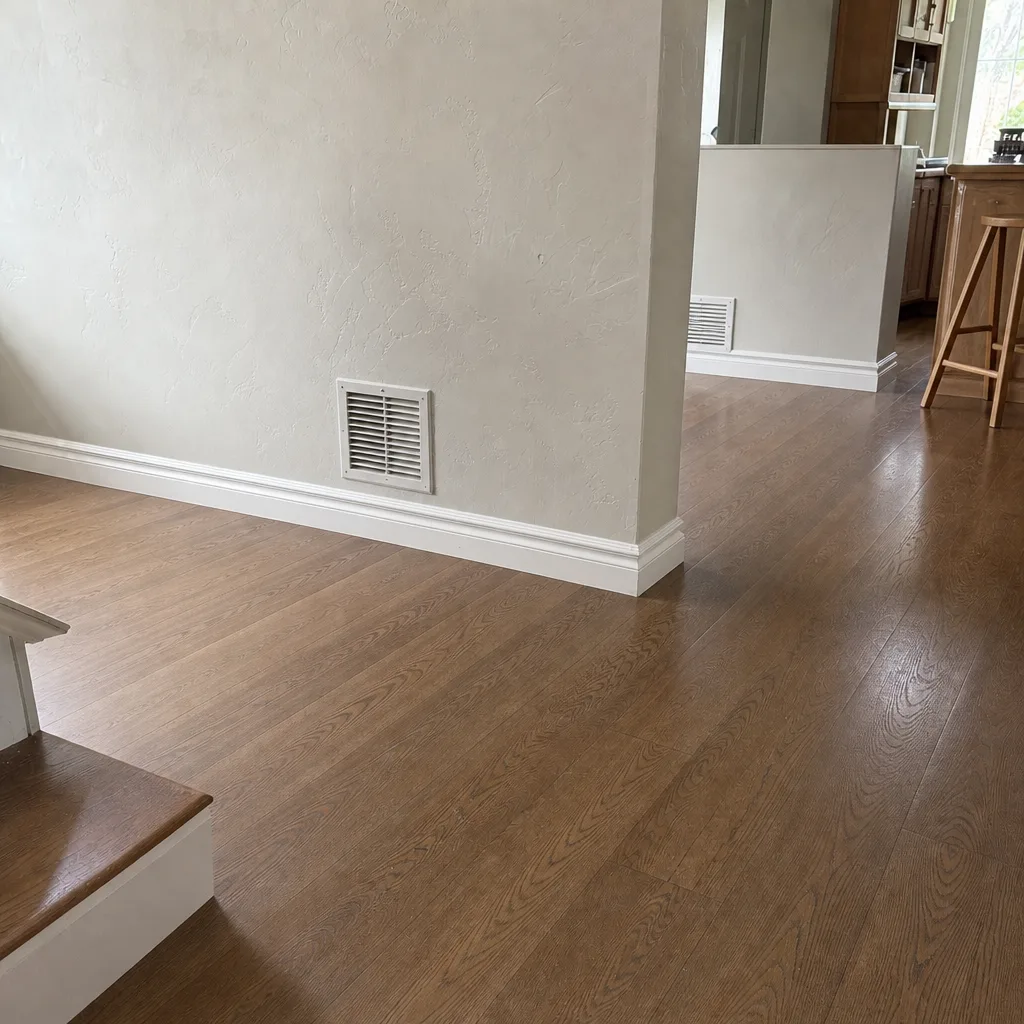
Whole-system duct and dryer vent check with before-and-after photos - you see exactly what came out of your vents
That "$99 whole-house special" is a bait ad - the real number appears once they are in your hallway, or the "clean" is a shop-vac at the register. We photograph the inside of your ducts before and after instead.
The Complete Guide to Air Duct Cleaning in Carlsbad
Most Carlsbad homeowners don’t actually have dirty ducts. They have dirty ducts plus a system problem that made them dirty, and cleaning without diagnosing the system just resets the clock. A duct system cleaned without measuring static pressure is like changing your oil without checking why the engine was burning it in the first place – the symptom is gone, the cause is not. This guide explains how a duct system actually works as an integrated pressure network, what a complete cleaning job addresses versus what a one-visit shop-vac crew ignores, and how Carlsbad’s specific climate shapes the way your ductwork degrades over time.
Quick Answer
Air duct cleaning in Carlsbad involves source-removal cleaning of the entire duct network – supply and return sides, trunk lines, branch runs, plenums, and the air handler – using professional-grade rotary brush and HEPA vacuum equipment. A complete job addresses not just the debris inside the ducts but the leaks, disconnects, and pressure imbalances that caused the contamination in the first place. Expect a thorough whole-system cleaning to take several hours and to include before-and-after photo documentation of the actual duct interiors.
Styles & brands we work with
- Whole-home duct cleaning
- Dryer vent cleaning
- Camera inspection
- Sanitizing & deodorizing
Table of Contents
- How Duct Systems Actually Work in Carlsbad Homes
- Source-Removal Cleaning vs. What Low-Bid Companies Do
- Why the Equipment Matters: Rotobrush, Nikro, and HEPA Capture
- How Carlsbad’s Climate Affects Duct Lining and Cleaning Frequency
- The Five Duct System Components Beyond the Main Trunk Lines
- How to Read a Post-Cleaning Verification
- When Cleaning Isn’t Enough: Air Duct Repair
- Dryer Vents: A Separate Fire-Prevention Service
How Duct Systems Actually Work in Carlsbad Homes
Your duct system is not a passive set of tubes. It’s a pressurized delivery network, and every component either contributes to balanced airflow or fights against it. When the system works correctly, conditioned air moves from the air handler through the supply plenum, into the trunk line, down branch runs, and out through registers at designed pressures. The return side pulls air back through return grilles, down return ducts, and into the air handler to be conditioned again.
In a typical Carlsbad home, this network runs through the attic, through interior wall cavities, or under the floor depending on when the house was built and what the builder chose. Homes in established neighborhoods like Bressi Ranch, La Costa, and Aviara often have duct layouts specific to their construction era, and each layout has its own failure patterns. A ranch-style home with attic ductwork behaves differently than a two-story with ducts in the floor joists.
When the system develops a leak, a disconnect, or a crushed section, the pressure balance shifts. The system draws unconditioned air from the attic or crawlspace, and the rooms furthest from the air handler starve. That imbalance is what drives much of the contamination homeowners eventually see. Dust doesn’t just happen to show up in ducts; it gets pulled in through gaps and leaks, then distributed unevenly throughout the house. This is why we approach every job from the vent hood to the air handler with the assumption that contamination has a cause, not just a location.
Source-Removal Cleaning vs. What Low-Bid Companies Do
The industry standard for legitimate air duct cleaning is source removal, which the National Air Duct Cleaners Association (NADCA) defines as the mechanical agitation of debris from duct surfaces combined with negative-pressure collection at the point of contact. In practice, that means a rotating brush physically scrubs the interior walls of the duct while a HEPA-filtered vacuum captures the dislodged particulate before it can escape into the living space.
What many low-bid companies actually do is simpler and far less effective. A technician connects a large vacuum to one register and then walks around with a handheld brush or compressed air wand, hoping the suction reaches far enough to pull everything out. It doesn’t, especially in flex-duct systems common in Carlsbad homes where the interior liner is ribbed and traps debris beyond the effective reach of suction-only rigs. The result is a job that looks busy but leaves the majority of the contamination in place.
Here’s what a legitimate source-removal job includes:
- Mechanical agitation of every duct surface using a rotary brush or pneumatic whip sized for the specific duct diameter.
- Continuous negative pressure from a HEPA-filtered vacuum unit connected at the air handler or a main trunk access point.
- Access cuts in the ductwork that are properly sealed and documented after the job.
- Cleaning of both the supply and return sides, including the plenums and air handler interior.
- Post-cleaning visual verification with camera footage of the duct interiors.
If a quote comes in at a fraction of the market rate and doesn’t include access points, brush agitation, or documentation, the company is almost certainly doing suction-only work. In Carlsbad’s market, the difference between a legitimate whole-system cleaning and a suction-only pass is the difference between solving a problem and postponing it.
Why the Equipment Matters: Rotobrush, Nikro, and HEPA Capture
Your ducts are only as clean as the equipment clearing them. That’s not marketing language – it’s a mechanical reality. Duct interiors are coated with years of accumulated dust, skin cells, pet dander, and construction debris, much of it adhered to the surface rather than resting loosely. Removing that film requires physical contact with the duct wall, not just airflow across it.
We run Rotobrush rotary brush systems for the mechanical agitation side of every cleaning. The brush head spins inside the duct, scrubbing the walls while the vacuum pulls the dislodged material out behind it. This is the same approach used in commercial and industrial settings, where duct contamination can shut down operations and certification matters. The brush reaches into the ribs of flex-duct liners where suction alone can’t get to.
On the collection side, we use Nikro commercial HEPA vacuum equipment. The filtration matters because dislodged particulate is microscopic, and if the vacuum unit doesn’t filter to HEPA standards, it’s just discharging fine dust back into the home through the exhaust. A shop vac or consumer-grade blower can’t do this job. Neither can a truck-mounted carpet cleaning machine adapted for duct work. The negative pressure has to be strong enough to maintain containment throughout the entire system, and the filtration has to capture what the brush kicks up.
For homes with elevated contamination scenarios – mold-adjacent air quality issues, post-construction debris, heavy pet or smoker residue – we can bring Abatement Technologies air filtration equipment to bear. That’s the difference between a cleaning crew and a specialist who understands that the air in the duct doesn’t stay in the duct.
How Carlsbad’s Climate Affects Duct Lining and Cleaning Frequency
Carlsbad sits in a coastal climate zone where humidity levels run higher than inland areas for much of the year. That moisture matters for your ducts. The interior lining of flex duct and the insulation inside hard pipe absorb humidity, and when that moisture combines with trapped organic dust, the lining itself can begin to degrade. What starts as a dusty surface becomes a damp, sticky film that holds onto whatever passes through.
This is different from what happens in dry inland climates like Temecula or Escondido. There, dust stays loose and moves through the system easily. In Carlsbad, the same dust settles, picks up moisture, and bonds to the duct surface. That’s why homes here often need mechanical brushing even when the visual inspection shows light debris. The contamination isn’t the loose stuff you can see at the register – it’s the adhered film you can’t.
The degradation also affects the structural integrity of the duct lining over time. As the inner liner breaks down, it can separate from the insulation, creating pockets where moisture and debris accumulate. When that happens, cleaning restores the surface but doesn’t fix the damaged section. That’s where air duct cleaning ends and duct repair begins, and it’s one of the reasons we maintain a repair scope alongside our cleaning work.
The Five Duct System Components Beyond the Main Trunk Lines
A complete cleaning job covers the entire pressure network, not just the big ducts you can see from the attic access. Here are the five components that get skipped by crews that only do main trunk lines, and why each one matters:
- Supply and return plenums – These are the transition boxes where the air handler connects to the trunk lines. They’re the highest-pressure points in the system, and they collect whatever the air handler pushes out. If the plenums aren’t opened and cleaned, the first thing the freshly cleaned trunk line does is pull contamination right back in.
- Branch run connections – The takeoffs where branch ducts connect to the trunk line are always partial obstructions. Debris builds up on the downstream side of each connection, and a brush has to reach each one individually. Suction-only rigs can’t do this.
- Return air cavities and panned joists – In many Carlsbad homes, return air travels through building cavities rather than dedicated ductwork, especially in floor-joist returns. These cavities are part of the duct system and collect debris at the same rate, but they require different access and cleaning methods.
- Register boots and grilles – The final few feet before conditioned air enters a room is the most common place for visible dust buildup. Grilles get wiped by homeowners, but the boot behind the grille collects the same adhered film as the rest of the system and needs mechanical cleaning from the inside.
- The air handler interior – The blower wheel, evaporator coil, and interior cabinet are technically HVAC components, but they’re inside the duct network. If the coil is coated in dust and the blower wheel is caked, the system reintroduces contamination immediately after cleaning. A complete job includes air handler cleaning as part of the scope.
Skipping any one of these components means the system isn’t clean. It just looks clean from the register.
How to Read a Post-Cleaning Verification
Any legitimate duct cleaning company should be able to show you what the inside of your ducts looked like before and after the job. The standard is a camera inspection, not a verbal assurance. Ask for the footage. A reputable crew will document the work and walk you through it.
Here’s what proper verification looks like:
- A before image from inside the main trunk line showing the debris field, followed by an after image from the same location showing bare duct wall.
- Multiple access points photographed and sealed, not just one shot from the return grille.
- Airflow measurements at key registers if the job included a system performance component, showing static pressure before and after.
- Documentation of any areas that couldn’t be cleaned due to access limitations or pre-existing damage, rather than silence about them.
If a company finishes the job and can’t show you what the inside of the ducts looks like, that’s a red flag. You can’t verify a cleaning you can’t see, and you shouldn’t pay full price for one. In our experience, around fifteen to twenty minutes of a multi-hour job should be spent on verification footage and walking the homeowner through what was found and what was done about it.
When Cleaning Isn’t Enough: Air Duct Repair
We don’t just clean – we repair. That distinction matters because a meaningful percentage of the systems we see in Carlsbad have damage that cleaning alone won’t fix. Disconnected sections, crushed flex runs, torn liners, and poorly sealed joints are all common, and they all mean the same thing: the system will re-contaminate itself as soon as the negative pressure comes back on.
Repair work includes reconnecting separated duct sections, replacing crushed or torn flex duct, sealing joints with appropriate mastic or tape, and patching access holes correctly. A sealed duct system is also a more efficient one, since conditioned air stops leaking into the attic and the system doesn’t have to work as hard to hold temperature. The repair scope is what prevents cleaned ducts from getting dirty again through the same gaps that made them dirty the first time.
Most duct cleaning companies in Carlsbad don’t offer repair because it requires skills and materials they don’t carry. It’s easier to clean and leave than it is to fix what the camera found. We carry the materials and do the work because a clean duct system with a six-inch gap in the trunk line is still a dirty system in three months.
Dryer Vents: A Separate Fire-Prevention Service
Dryer vents are a fire risk, not a convenience item. Lint accumulates in the vent run over time, reducing airflow and raising the temperature at the dryer’s exhaust. The U.S. Fire Administration has repeatedly named dryer vent fires as a leading cause of residential structure fires, and the most common contributing factor is accumulated lint in the vent system.
Dryer vent cleaning is a distinct service from air duct cleaning, with different tools and different access considerations. The vent run is typically smaller in diameter, often made of rigid or flexible metal, and runs directly to the exterior. We clean it from both ends – at the dryer connection and at the exterior termination – using brushes sized for the vent diameter and a vacuum to capture what the brush breaks loose.
In Carlsbad’s climate, dryer vents can also accumulate moisture-related debris, especially when exterior terminations are blocked by vegetation or the vent run is long. A thorough cleaning restores proper airflow, which shortens drying times and reduces the fire risk. If you haven’t had your dryer vent cleaned in the past year, or if your dryer has started taking longer to dry a load than it used to, the vent is telling you something.
Common Mistakes to Avoid
- Hiring a company that quotes per-vent pricing. Per-vent pricing encourages crews to count vents rather than clean systems, and it’s a structure designed for upsells. A proper quote is based on system size, access difficulty, and the scope of work – not the number of registers.
- Expecting cleaning to fix a leak. If your ducts are leaky, cleaning them just means the new air leaks out the same place the old air did. Leaks need repair, and any company that doesn’t check for them isn’t finishing the job.
- Judging cleanliness by the register. The register is the last six inches of a system that may run sixty feet. You can’t see the trunk line, the plenums, or the air handler from there, and those are where the contamination concentrates.
- Skipping the return side. The return side pulls air from your living space and carries it to the air handler. It collects the same dust and dander as the supply side, but some crews only clean the supply ducts because they’re more visible. Your return side needs the same cleaning.
- Choosing a company on price alone. Carlsbad has a wide range of duct cleaning quotes, and the lowest one is almost always a suction-only pass with no access cuts, no brush, and no documentation. A whole-system source-removal job costs what it costs because it takes time and equipment to do properly.
- Waiting until you can see dust blowing from the registers. By the time dust is visible at the supply grille, the interior of the system has been coated for a while. Visible dust is a late-stage symptom, not an early warning sign.
- Assuming a new HVAC installation means clean ducts. If a new air handler or condenser was installed without cleaning and sealing the existing duct network, the old ducts are still carrying old contamination. New equipment doesn’t clean the distribution system.
See the difference
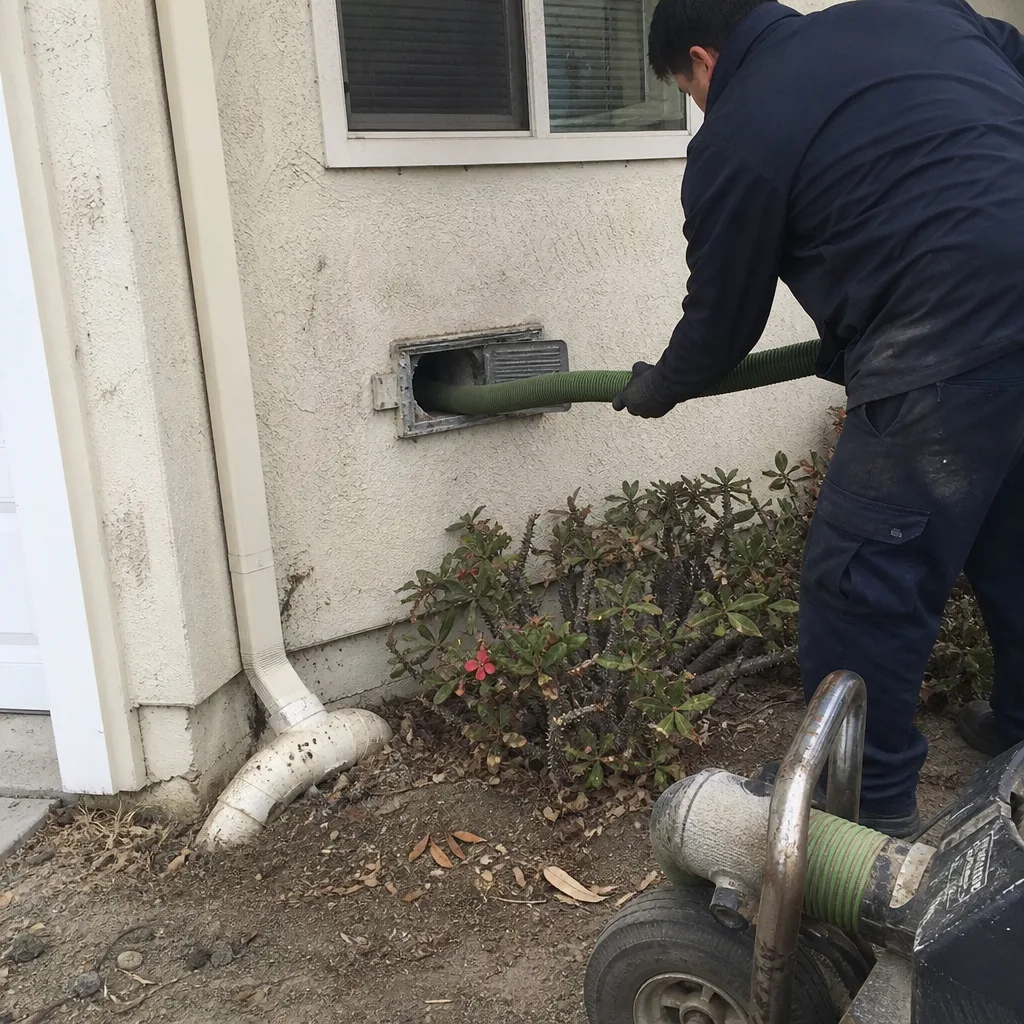 Before
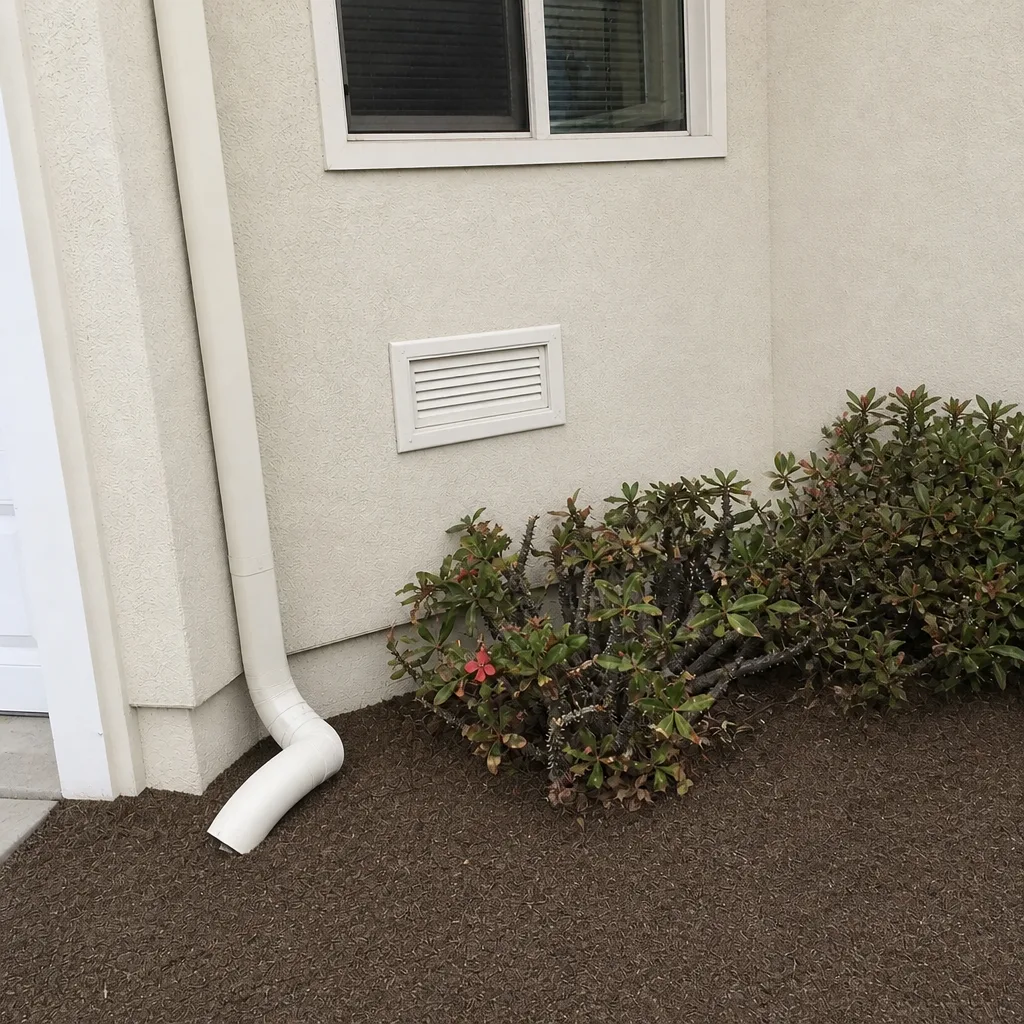 After
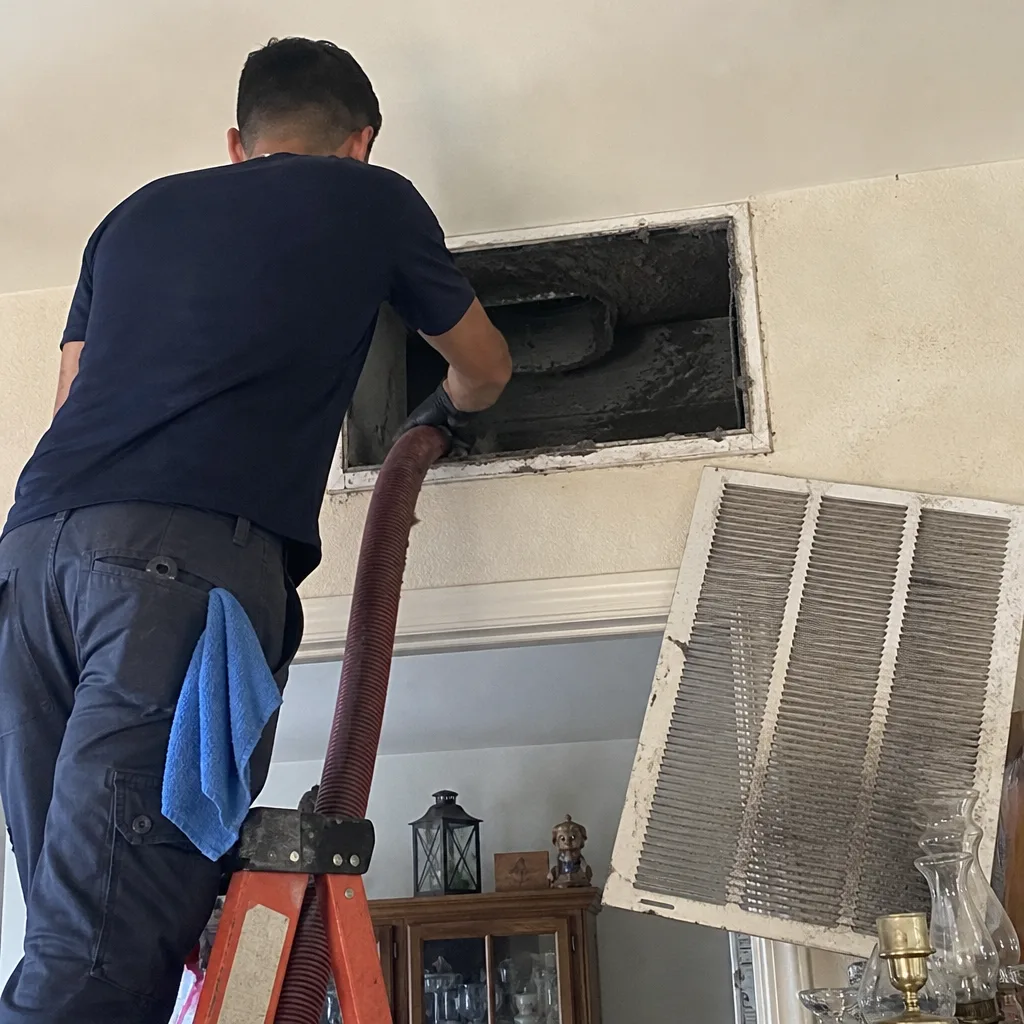 Before
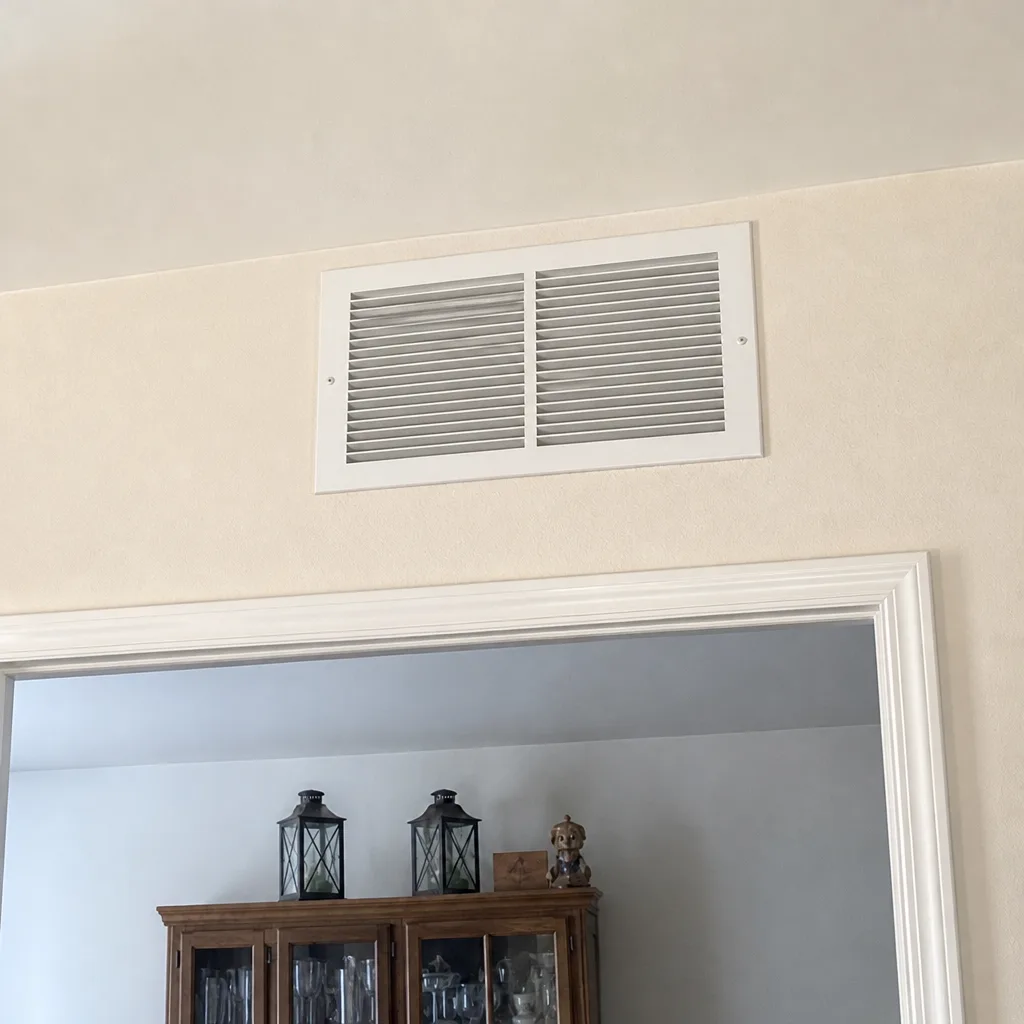 After
 Before
 After
When to Call a Professional
Call a professional if you’ve never had your ducts cleaned since the system was installed, if you’ve done major remodeling that generated drywall dust or construction debris, or if a household member has allergy or asthma symptoms that improve when they leave the house. Call if you smell must or mildew when the system runs, or if you can see visible dust buildup on the register grilles despite regular vacuuming. Call if a home inspection flagged duct contamination or if you’ve had a pest issue in the attic that left droppings in the ductwork. Duct Cleaning Carlsbad offers free estimates in Carlsbad – call (855) 353-1322 and we’ll take a look.
Frequently Asked Questions
Air duct cleaning in Carlsbad typically runs between $400 and $1,100 for a whole-system job depending on the size of the home, the number of stories, access difficulty, and whether the air handler and return cavities are included. The written estimate sets the final price, and any company that quotes a flat rate before seeing the system is guessing. Call (855) 353-1322 for an exact quote – estimates are free.
Most homes in Carlsbad benefit from a full cleaning every two to five years, depending on household factors like pets, occupant count, and whether anyone smokes indoors. Homes with allergy or asthma sufferers, or with recent construction dust in the system, may need more frequent service. A visual inspection of the duct interior gives a better answer than a calendar.
Cheaper quotes almost always mean suction-only cleaning without brush agitation, access cuts, or air handler cleaning. The equipment cost and labor hours for a legitimate source-removal job set a floor on pricing, and companies that quote below that floor are skipping steps. You get what the equipment can reach, not what a complete job would include.
Ask for before-and-after camera footage from inside the trunk lines and plenums. A legitimate company documents the cleaning and walks you through what the camera showed. If the company can’t or won’t show you the inside of your ducts after the job, assume it wasn’t cleaned to source-removal standards.
Yes. The air in your home passes through the duct system every time the HVAC runs, and whatever is inside the ducts – dust, pet dander, pollen, mold spores – gets carried into the living space. For households with allergy or asthma concerns, the duct system acts as a reservoir that releases particulate into the air the family breathes.
It makes practical sense, since the two systems are adjacent and both affect airflow through the home. However, they require different tools and are properly quoted as separate services. We offer dryer vent cleaning as its own fire-prevention scope, and many Carlsbad homeowners schedule both during the same visit. Call (855) 353-1322 to ask about scheduling both services.
The Bottom Line
A complete air duct cleaning in Carlsbad is a source-removal job that treats the duct system as an integrated pressure network, not a simple tube to vacuum. It includes mechanical brushing, HEPA collection, plenum and air handler cleaning, and verification footage. It also includes an honest assessment of whether leaks or damage need repair before the cleaning can hold. Your ducts are only as clean as the equipment clearing them, and they’re only as reliable as the integrity of the system around them. If you want the job done properly, call (855) 353-1322. We answer 24/7. Fast dispatch from 7am to 7pm, Sunday through Friday.
Written by the team at Duct Cleaning Carlsbad, serving Carlsbad since 2014.