
Last updated November 4, 2026
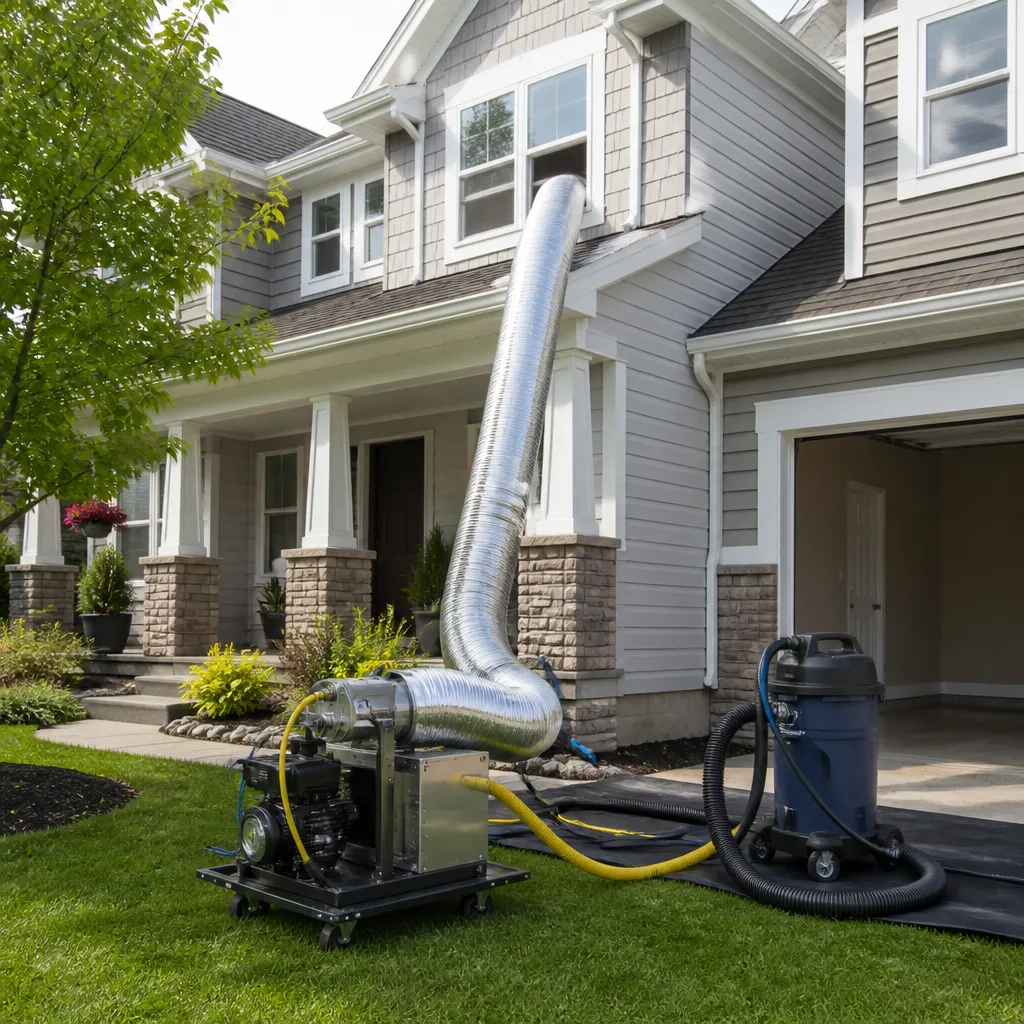 Whole-home duct cleaning
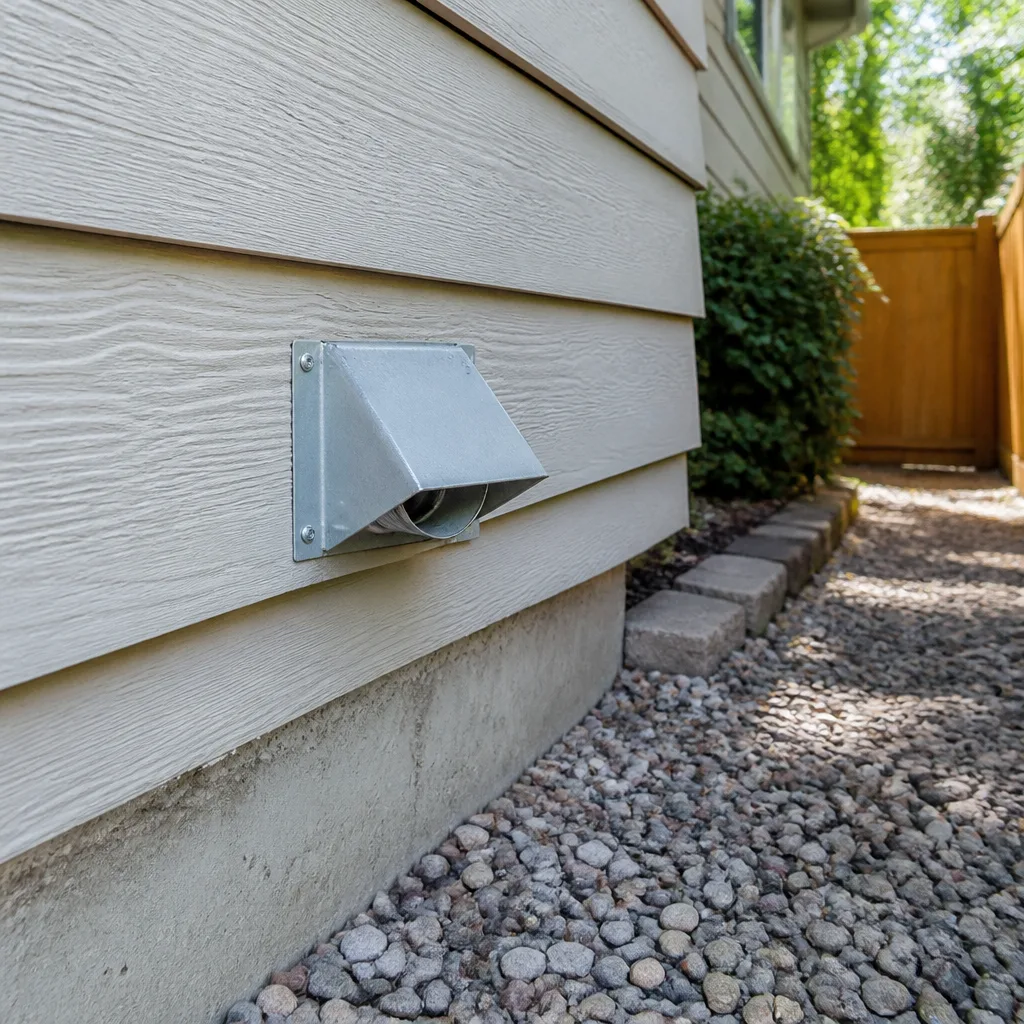 Dryer vent cleaning
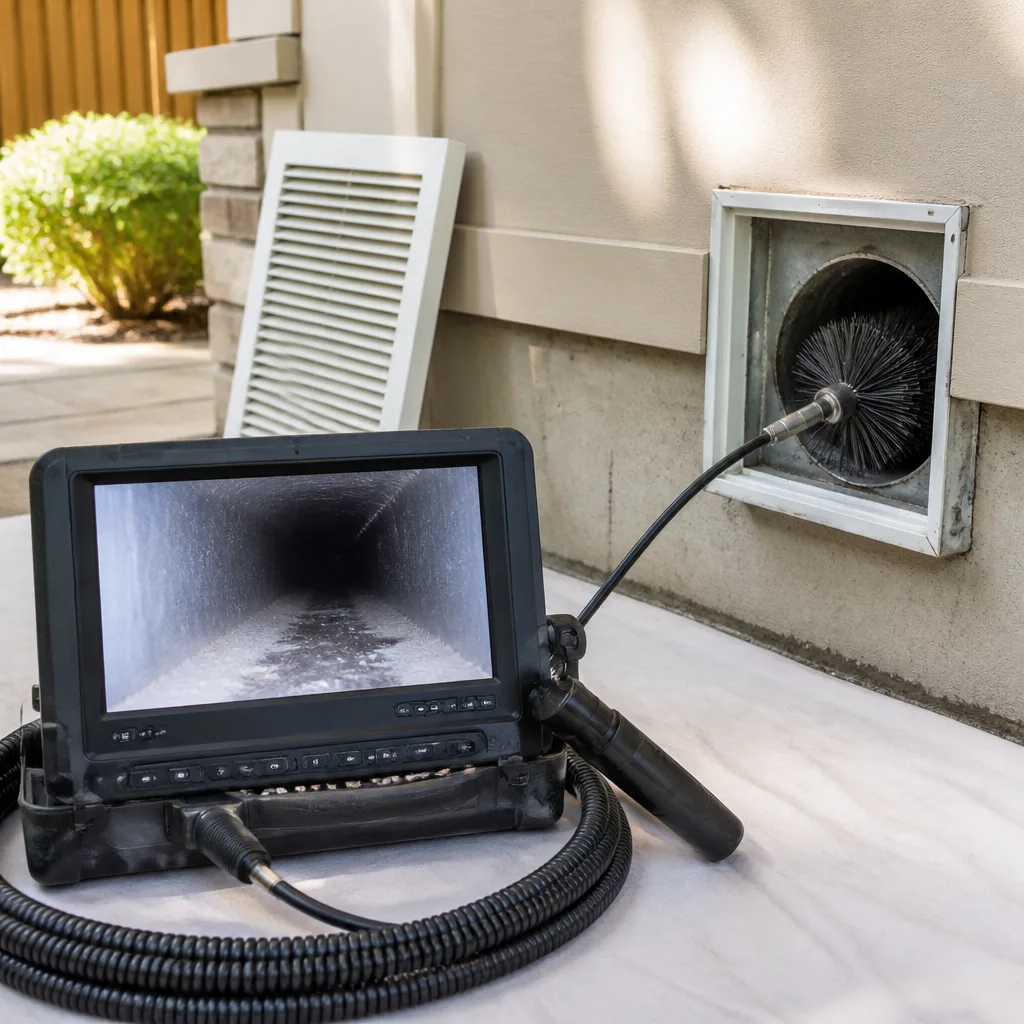 Camera inspection
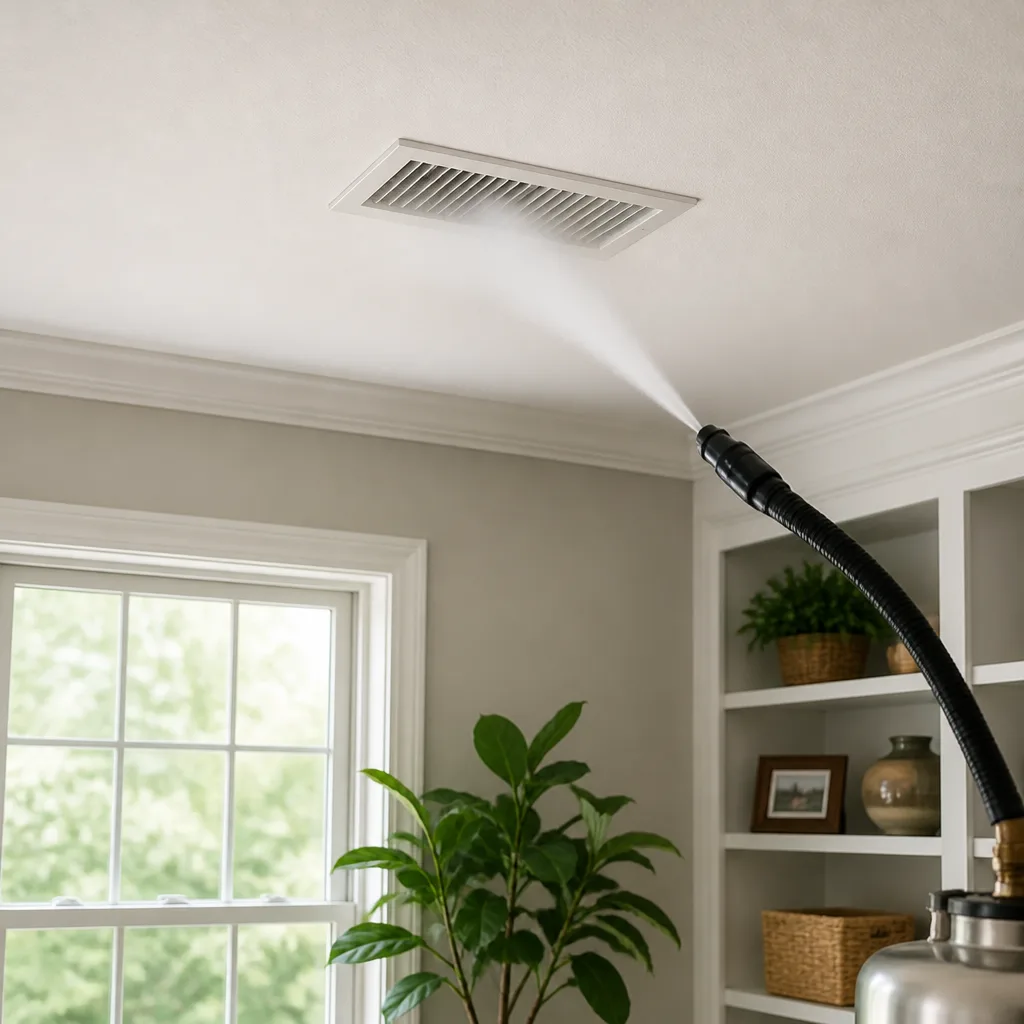 Sanitizing & deodorizing
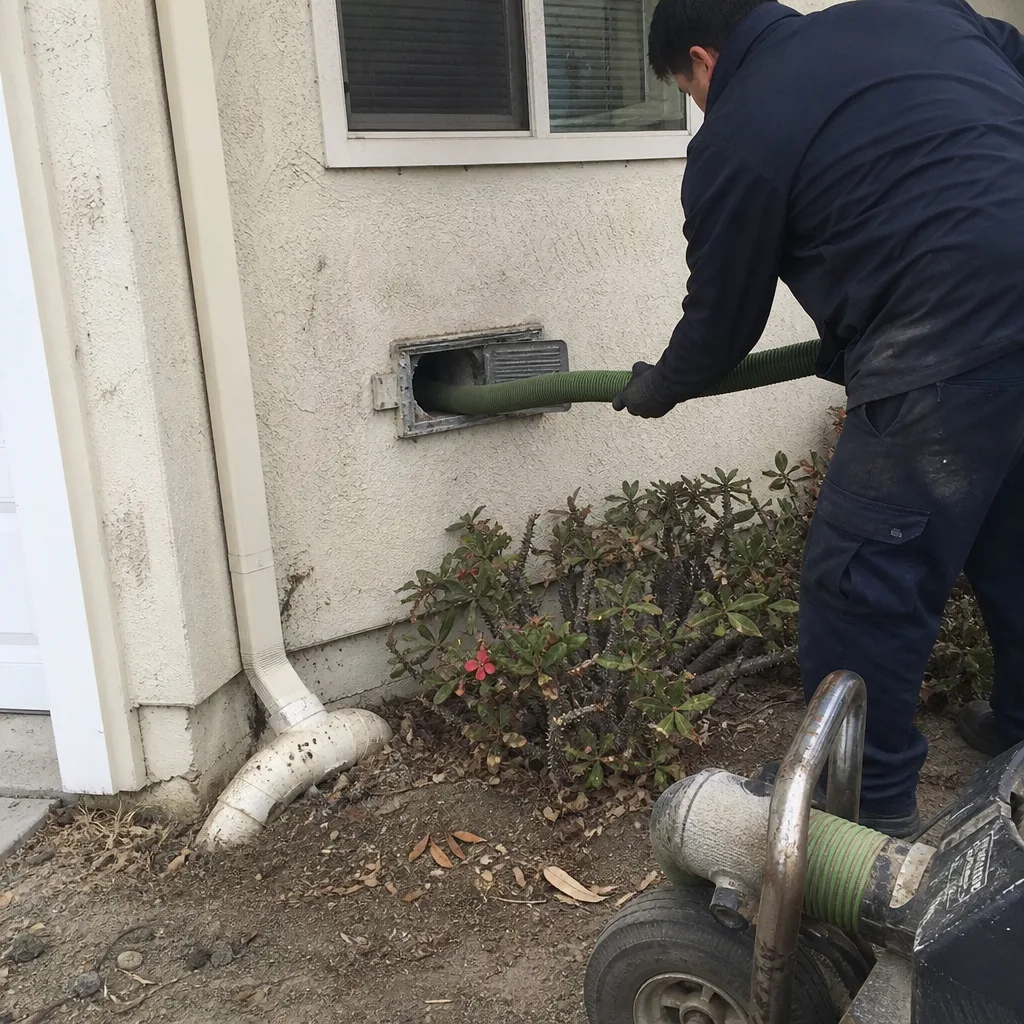
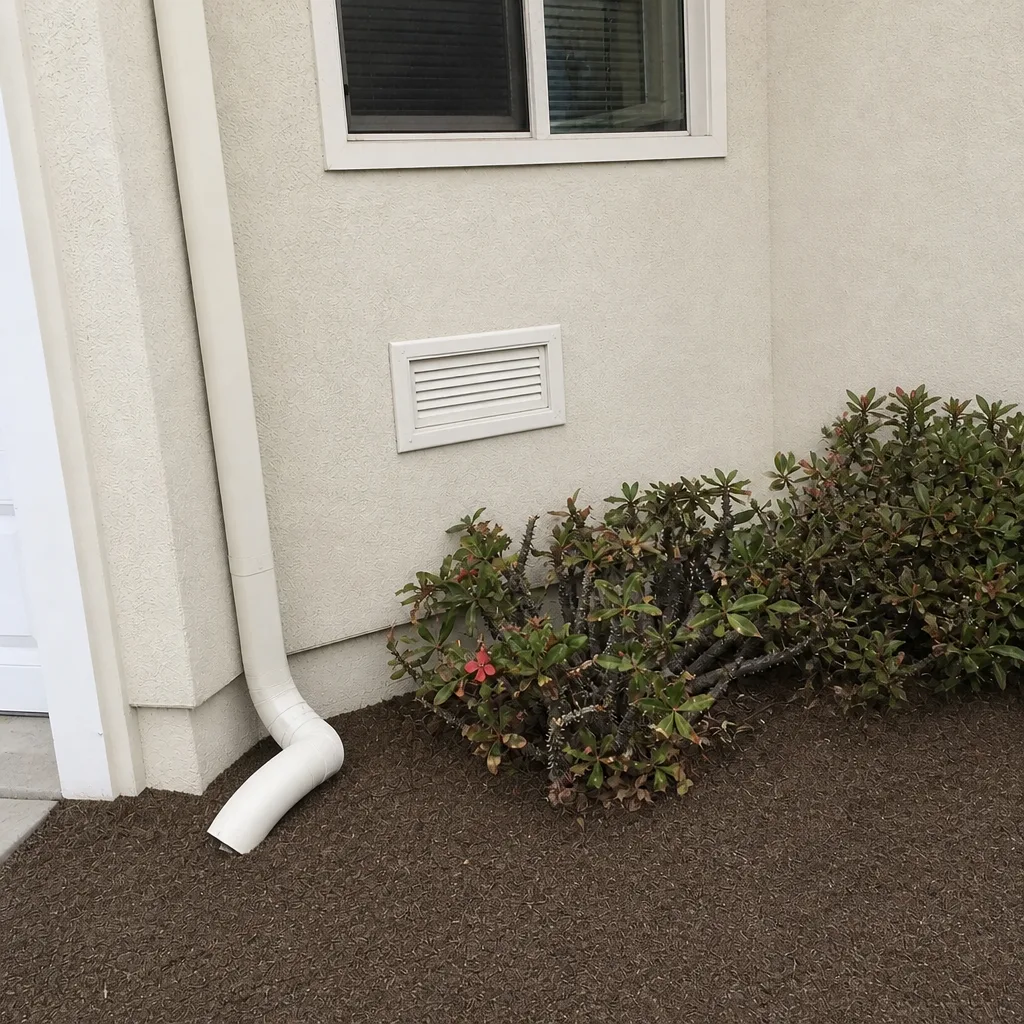
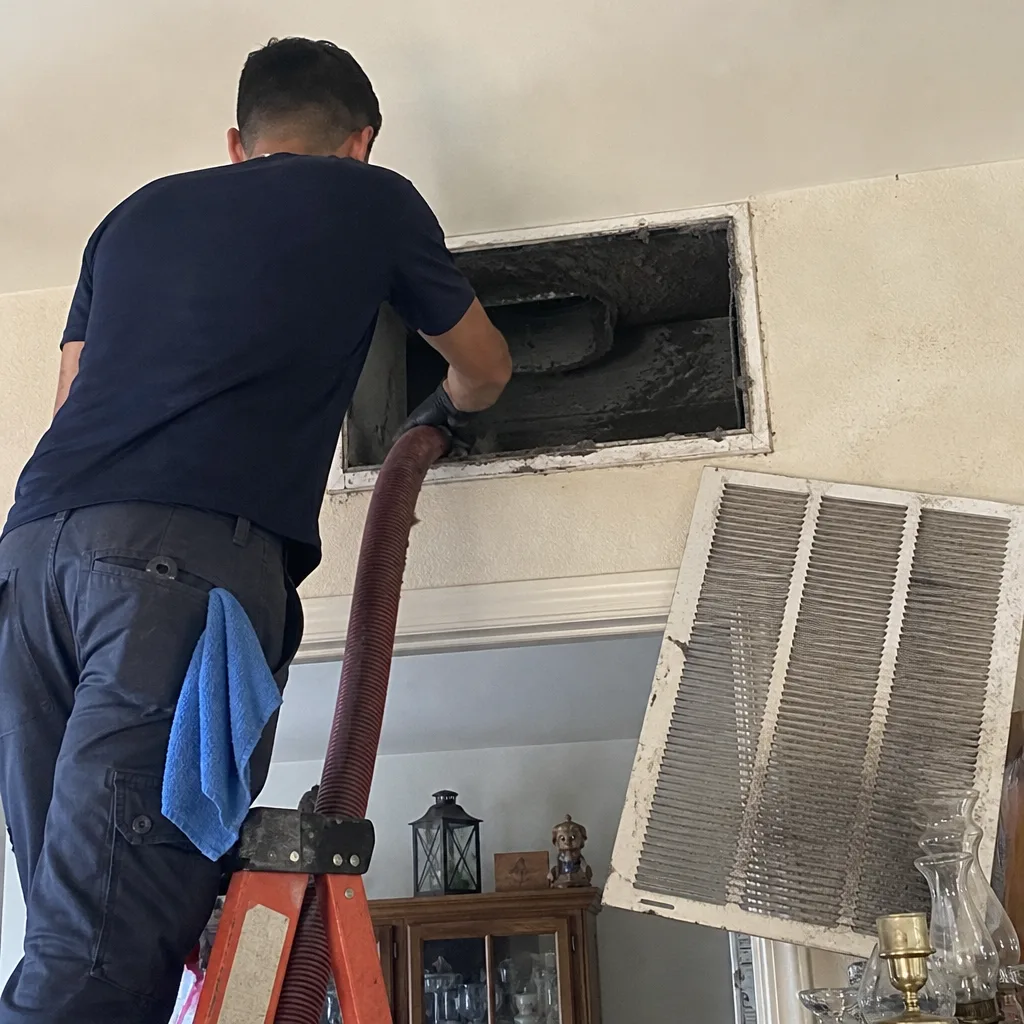
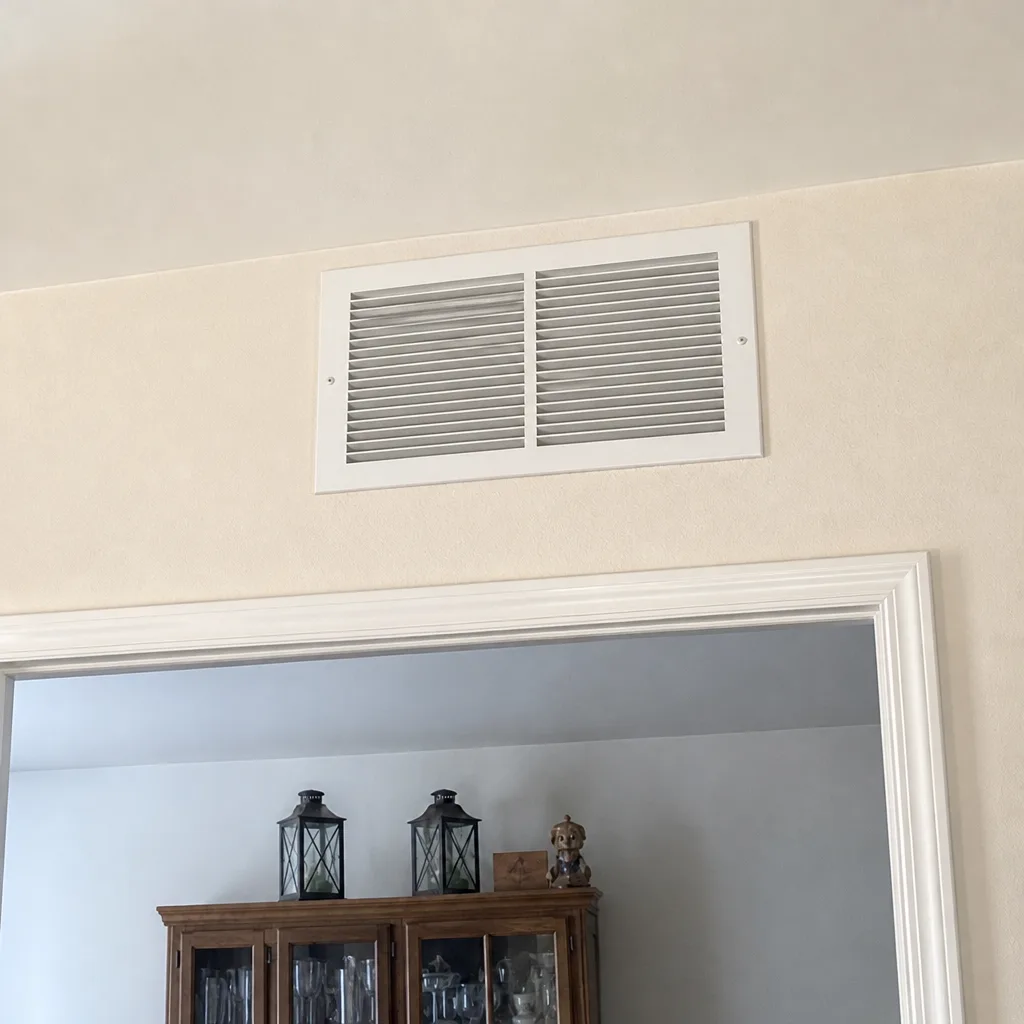
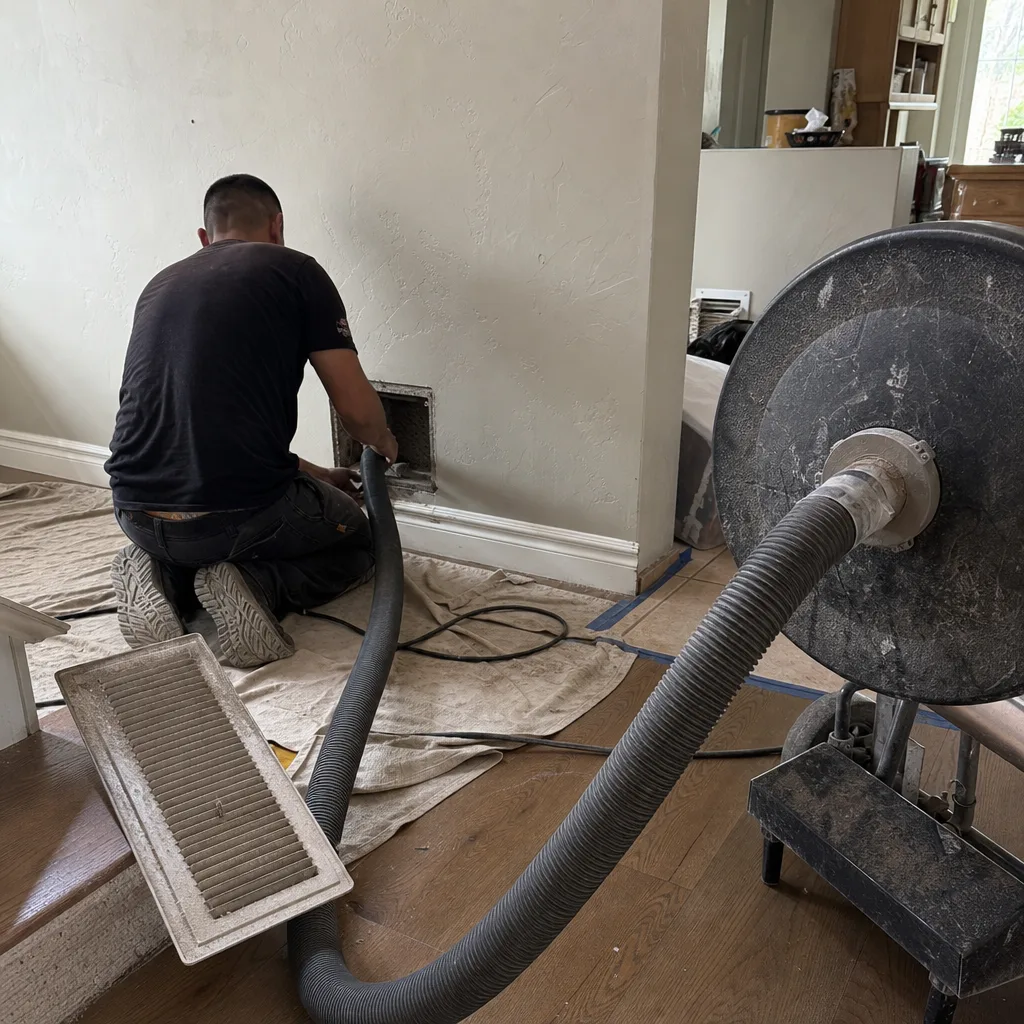
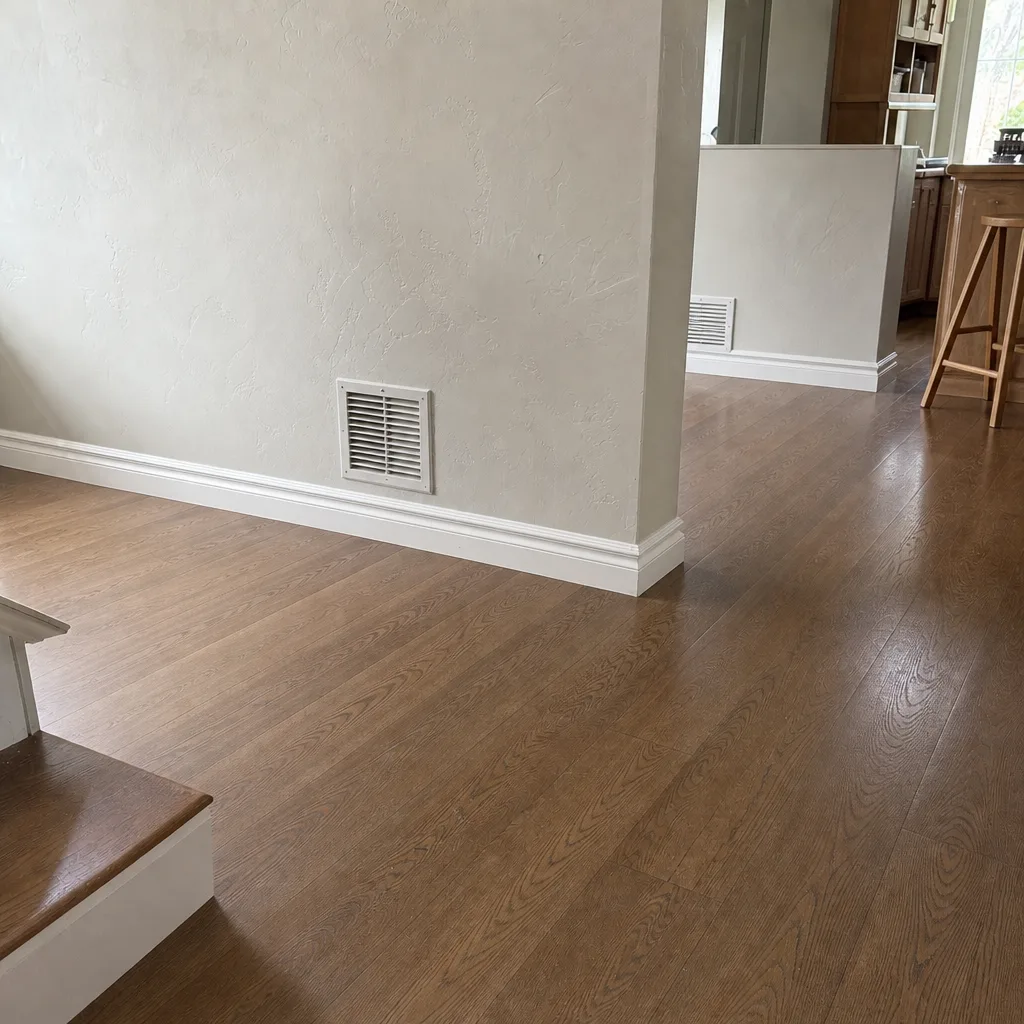
Whole-system duct and dryer vent check with before-and-after photos - you see exactly what came out of your vents
That "$99 whole-house special" is a bait ad - the real number appears once they are in your hallway, or the "clean" is a shop-vac at the register. We photograph the inside of your ducts before and after instead.
Air Duct Cleaning Cost Breakdown: The Carlsbad Homeowner’s Reference for 2026
The $149 duct cleaning ad and the $800 duct cleaning quote can both be honest prices. They typically describe completely different jobs, performed with completely different equipment, under completely different definitions of what “clean” actually means. One crew arrives with a shop vac and a drill attachment, spends 45 minutes, and leaves. Another brings a truck-mounted HEPA vacuum and a rotary brush system, spends four hours, and documents every register. Both will send you an invoice. Only one will send you before-and-after photos that show the inside of your ducts. This guide walks through the actual cost structure of air duct cleaning in Carlsbad so you know exactly what you’re paying for at each price point, what’s worth the money, and what contract language stops a bait-and-switch before it starts.
Styles & brands we work with
- Whole-home duct cleaning
- Dryer vent cleaning
- Camera inspection
- Sanitizing & deodorizing
Quick Answer
Air duct cleaning in Carlsbad typically costs between $450 and $900 for a full-system cleaning of a standard 3- to 4-bedroom home in 2026, with smaller condo units starting around $300 and larger or heavily contaminated systems running $1,200 or more. The final price depends on three things: the square footage of conditioned space, the number of registers and returns, and whether the job includes the air handler, dryer vent, or duct repair. Any quote below $250 for a whole-home cleaning should be treated as a red flag for a bait-and-switch sales tactic.
Table of Contents
- Line-by-Line: What a Carlsbad Duct Cleaning Invoice Actually Contains
- Why Carlsbad Ducts Get Dirtier Than You’d Expect
- Why Equipment Drives the Price: Rotobrush, Nikro, and a Shop Vac Walk Into a House
- The $89 Special: How Bait-and-Switch Pricing Works and the Contract Language That Stops It
- How Carlsbad’s Housing Stock Affects Your Quote
- The ROI Question: When Does Duct Cleaning Pay for Itself?
- What Else Should Be Done at the Same Time
- Common Mistakes to Avoid
- When to Call a Professional
- Frequently Asked Questions
- The Bottom Line
Line-by-Line: What a Carlsbad Duct Cleaning Invoice Actually Contains
A legitimate full-system duct cleaning is not a single line item. It’s a series of tasks, and each task takes labor, equipment time, and sometimes materials. When a company quotes you one flat number with no breakdown, you’re trusting that number without knowing what it excludes. That’s exactly how the low-price operators win the phone call and lose the customer on the back end. Here’s what a properly scoped invoice looks like for a typical 2,000 to 2,400 square foot Carlsbad home in 2026.
Base system cleaning: $300 to $550. This covers the supply and return duct runs, all accessible registers, and the main trunk lines. It includes the actual mechanical agitation of the duct walls and the negative-air capture of what’s dislodged. At this price, the crew should be using a rotary brush or compressed-air agitation combined with a HEPA-filtered vacuum. If the crew arrives with a portable vacuum and a drill whip, this line item is overpriced at $300.
Per-register fees: most reputable companies don’t charge them. Some operators quote a low base and then add $15 to $25 per register, which is how a “cheap” job becomes a $600 invoice. A full-system quote should count registers as part of the base cleaning. If a quote lists per-register pricing, ask why the registers aren’t included in the system cleaning. They are the access points to the system, not optional add-ons.
Air handler and evaporator coil cleaning: $150 to $300. This is the component most cheap cleaners skip entirely. The coil sits in the airflow path, and if it’s caked with dust and pet hair, your “cleaned” ducts are blowing air across a dirty coil and picking up new particulates within days. Getting this done properly requires opening the air handler cabinet, which takes time and care. This is one of the largest difference-makers in actual indoor air quality after the job.
Dryer vent cleaning add-on: $75 to $150. This is a separate service that most duct cleaners can do, and bundling it with a duct cleaning is more efficient for the crew and cheaper than scheduling it separately. The dryer vent cleaning service is a fire-prevention measure, not an air-quality extra, but it involves the same negative-air equipment and the same access skills. We treat it as a distinct service because that’s what it is.
Duct repair or sealing: $200 to $600, usually quoted after inspection. If a duct run has separated at a joint or a flex duct has a tear, cleaning alone won’t fix the leak that’s pulling attic air into the system. Some companies can’t do this repair at all and won’t even look for it. That’s a disservice, because a leak downstream of the air handler re-contaminates every cleaned duct within a few weeks. Full air duct repair capability is part of the job when we clean a system.
Mold or biological contamination remediation: $800 to $2,500+. This is the outlier that most guides ignore. If a visual inspection finds mold growth on the duct lining or the coil, you’re no longer looking at a cleaning. This is a remediation scenario, often involving antimicrobial treatment and containment protocols, and it requires different equipment and a different skill set. This is one reason we run Abatement Technologies filtration equipment on jobs where elevated contamination is present. You want a company that recognizes the difference between dust and microbial growth and responds accordingly.
Why Carlsbad Ducts Get Dirtier Than You’d Expect
Carlsbad has a mild climate, and that mildness is part of the problem. Homes here don’t run the furnace for six straight months, which means dust settles in ductwork for long stretches without airflow to push it through. When the system does kick on, it’s often the air conditioner, which introduces moisture at the coil. That moisture combines with fine dust to form a film on the duct walls that simple vacuuming doesn’t remove.
We also see a lot of homes where the HVAC system is a secondary thought. Carlsbad’s coastal-adjacent neighborhoods are full of homes where windows are open a good portion of the year. That’s pleasant, but it means pollen, road dust, and construction debris from nearby projects enter the home and settle into the return ducts. Homes in the older Bressi Ranch and La Costa tracts have return registers placed low on walls or in hallways, and those returns act as dust collectors for everything tracked through the front door.
Pets are a factor in Carlsbad more than most coastal cities. This is a heavily dog-owning community, and pet dander is one of the stickiest contaminants in a duct system. Dander doesn’t just sit on surfaces; it works its way into the fibrous lining of flex ducts, where a simple air sweep won’t dislodge it. Getting it out requires mechanical agitation, not just negative pressure. That’s a technical distinction that matters when you’re comparing methods and prices.
In our experience, the average Carlsbad home that hasn’t been cleaned in five to ten years has an accumulation of fine dust and dander that justifies every dollar of a proper cleaning. It’s not dramatic. It’s not a horror show. It’s just a lot of fine particulate that doesn’t belong in the air you breathe.
Why Equipment Drives the Price: Rotobrush, Nikro, and a Shop Vac Walk Into a House
Your ducts are only as clean as the equipment clearing them. This is not marketing language; it’s physics. A portable shop vac pulls maybe 100 to 150 cubic feet per minute of air through a skinny hose. A truck-mounted or commercial portable HEPA vacuum pulls 2,000 to 4,000 CFM. That difference is the difference between moving the air in a duct and actually capturing the particles suspended in it.
A rotary brush system like the Rotobrush units we run does two jobs simultaneously: it mechanically scrubs the duct walls while a dedicated vacuum pulls the dislodged debris out. The brush breaks the bond between the dust film and the duct surface, and the vacuum captures it at the source rather than letting it drift into the living space. This is the same fundamental technology used in commercial and industrial duct cleaning, scaled for residential systems.
The Nikro commercial HEPA vacuuming equipment serves a different purpose. It’s engineered to capture and contain the fine particulate that a standard vacuum filter lets pass through. HEPA filtration on the capture side means what comes out of the duct stays out of the house. That’s the entire point of the exercise. A shop vac either lacks HEPA filtration or has a filter that clogs quickly, reducing suction to almost nothing within the first 20 minutes of a job.
This equipment costs tens of thousands of dollars to purchase and maintain. The companies that own it charge more because their cost of doing business is higher and because the result they deliver is measurably different. When you see a quote from a company running commercial-grade equipment, you’re not paying for a brand name. You’re paying for the extraction capacity and the filtration standard that actually removes contaminants from your system. Commercial-grade equipment, residential pricing: that’s what we aim for as Duct Cleaning Carlsbad, and we’re transparent about what runs on each job.
The $89 Special: How Bait-and-Switch Pricing Works and the Contract Language That Stops It
The duct cleaning industry has a well-earned reputation for bait-and-switch pricing. The business model is simple enough to describe in four steps, and once you know it, you’ll see it coming.
- The hook. A company advertises a whole-home duct cleaning for $89, $129, or $149. This number is below the cost of sending a technician and equipment to your home, which means the company is losing money on the visit. That loss is an investment in the upsell.
- The arrival. The technician shows up, usually with minimal equipment, and begins the “inspection.” Within minutes, they’ve discovered a problem: mold, excess moisture, a disconnected duct, or a “contaminated” system that requires a multi-stage treatment. Some of these findings are legitimate. Many are not.
- The pivot. The technician explains that the advertised price covers only a “basic air sweep” and that your home requires the “premium” or “deep” cleaning package, plus antimicrobial fogging, plus duct sealing, plus a new air filter system. The new total is $900 to $1,500, and there’s a discount if you sign today.
- The pressure. You now have a technician in your home, a problem you didn’t know you had, and a discount that expires when they leave. Many homeowners sign. Some get a real service at a fair price. Many get a minimal cleaning and a bill five times the advertised number.
The defense is contract language. A written estimate, provided before work begins, with a specific scope of work and a fixed price, prevents the pivot. Here’s what to ask for:
- A line-item scope, not a tier name. “Deluxe Package” doesn’t tell you anything. Ask what equipment is used, what components are cleaned, and how long the job takes.
- A final price on the estimate before you sign. Any company that quotes a range or says “we’ll see once we start” is leaving the door open for the upsell. A fixed price, agreed before work starts, is the standard we hold.
- A repair authorization clause. If the technician finds a genuinely damaged duct or a mold problem, they should show you photos and get a separate signed authorization before doing repair work. No signed change order means no charge for the extra work.
- Before-and-after photos included. A company that shows you the inside of your ducts before and after the cleaning has nothing to hide. A company that resists photos or says the camera is broken is telling you something.
How Carlsbad’s Housing Stock Affects Your Quote
Carlsbad’s neighborhoods are not one housing type, and the ductwork in a 1990s Bressi Ranch tract home is different from the systems in a 1970s La Costa ranch or a newer build in Robertson Ranch. That matters for pricing because the difficulty of the job is directly tied to the configuration of the ducts.
Homes in La Costa and the older parts of Carlsbad Village often have sheet metal ducts that are in decent physical condition but have accumulation at the joints and in the boots. Sheet metal ducts clean well with rotary brushes, they hold up to mechanical agitation, and they don’t need to be replaced unless there’s rust or separation. These systems usually fall in the lower-to-middle range of the cost spectrum because the ducts are accessible and durable.
Homes in Bressi Ranch and the master-planned communities built in the late 1990s and 2000s frequently have flex ducts. Flex duct is a wire coil covered with insulation and a plastic or foil outer layer. It’s cheaper to install, which is why builders use it, but it’s more difficult to clean properly. The inner liner is textured, and contaminant binds to it more readily than to smooth sheet metal. It also can’t withstand aggressive agitation without tearing, which means the cleaning method has to be adjusted. A good operator will know the difference and price accordingly.
Access is the third variable. Some Carlsbad homes have attic-mounted systems with plenty of crawl space. Others have deep attics with ducts buried in blown-in insulation, or tight mechanical closets where the air handler is squeezed into a space that barely fits a human. The more time the crew spends navigating the structure, the higher the labor cost. It’s not a markup; it’s time on the job. When you call for a quote, tell us the approximate age of the home and the type of system you have. It helps us give you a realistic number over the phone.
The ROI Question: When Does Duct Cleaning Pay for Itself?
The honest answer is that duct cleaning is not primarily an energy-savings play. It’s an air quality and system hygiene service. That said, there are real financial offsets, and they’re worth calculating with realistic numbers.
Filter replacement frequency. A heavily loaded duct system sheds particulate into the airstream, which means your HVAC filter catches more and clogs faster. If you’re replacing a 1-inch filter monthly instead of quarterly, that’s an extra $15 to $40 per year for basic filters, and more for high-MERV media filters. After a proper cleaning, the filter runs cleaner because less dust is in circulation. This is a modest savings, but it’s real.
Energy consumption. A restricted return path or a dirty evaporator coil forces the blower to work harder to move the same volume of air. The energy penalty is measurable on a heavily contaminated system, but on an average home, it’s maybe 2 to 5 percent of the HVAC portion of your electric bill. The bigger issue is wear and tear. A dirty coil and a restricted system put extra load on the blower motor and the compressor, which shortens equipment life. A replacement blower motor is $400 to $800 installed, and a full compressor replacement often isn’t worth doing on an older unit.
System longevity. A neglected air handler is the likely point of failure on most Carlsbad HVAC systems. The coil runs wet during cooling season, and when it’s coated with dust, the moisture combines with that dust to form a corrosive film that reduces heat transfer and promotes the kind of microbial growth that leads to odors and biological contamination. Cleaning the coil adds a couple hundred dollars to a duct cleaning job and can extend the life of the air handler by years. That’s the highest-ROI component of the entire service.
There’s also the air duct cleaning benefit that doesn’t fit on a spreadsheet: the difference in how the air smells and feels, especially for households with allergy symptoms or pets. If someone in the home is waking up congested or coughing at night, and you’ve ruled out other causes, a duct system that hasn’t been serviced in a decade is a reasonable thing to investigate.
What Else Should Be Done at the Same Time
Duct cleaning opens up the whole air path, which is the only time several related services make sense. We don’t do these as upsells; we do them because leaving them undone means the cleaning you just paid for degrades faster than it should.
- Air handler and coil cleaning. This is the most commonly skipped component and the one that does the most for your long-term air quality and system life. The coil needs the same level of attention as the ducts.
- Supply and return register cleaning. The registers are the visible part of the system, and they collect dust, pet hair, and grease at exactly the point where air enters your rooms. Pulling them, cleaning them properly, and reinstalling them should be included in the base price. Confirm it is.
- Dryer vent cleaning. If your dryer vent hasn’t been cleaned in more than two years, this is the most efficient time to do it. Dryer vents are a fire risk, not a convenience item, and the buildup of lint in a long vertical vent run is a serious hazard in multi-story Carlsbad homes. The equipment and access are already on site.
- Duct inspection and repair. As the ducts are cleaned, we look for separation at joints, tears in flex runs, and sections of duct that have collapsed or been damaged by rodents. Repairing these leaks keeps attic air, insulation particles, and dust from re-entering the cleaned system. We don’t just clean; we repair, because a clean duct with a leak downstream isn’t clean for long.
- Whole-home air quality assessment. If the home runs a Honeywell or Aprilaire air quality system, we can service and support those units as part of the visit. Understanding how the filtration and humidity control components work together gives you a complete picture of what’s in the air and what’s being removed from it.
Common Mistakes to Avoid
- Choosing a contractor by price alone. A $129 whole-home duct cleaning is almost always a loss leader designed to get a technician in the door. If the price is below the cost of the crew and equipment, the profit is coming from somewhere else, and you’re the source.
- Not asking what equipment is used. “We clean ducts” is not a description of method. Ask if they use a rotary brush system and whether the vacuum is HEPA-filtered. If they can’t answer those two questions, they’re not a specialist.
- Skipping the air handler. The coil is the most important single component in the air path. Cleaning ducts without cleaning the coil is a partial job, and many low-price operators count on you not knowing that.
- Not getting a written scope before work starts. Verbal quotes allow for verbal change orders. A written estimate with a specific scope and a fixed price is the simplest protection against the bait-and-switch.
- Waiting until there’s a problem to think about the ducts. Odors, visible dust at registers, and rising allergy symptoms are late-stage indicators. A duct system that hasn’t been opened in ten years has been accumulating contaminate the whole time.
- Assuming a new home has clean ducts. Construction dust, drywall particles, and debris from tradespeople are common in the ductwork of newly built Carlsbad homes. New construction doesn’t equal clean ducts; it often means the opposite.
- Not keeping the before-and-after documentation. Those photos are your receipt. They prove the work was actually done, and they’re useful if you sell the home or make an insurance claim.
When to Call a Professional
You should call a duct cleaning professional when the system hasn’t been serviced in the last five years, or sooner if anyone in the home has persistent allergy or asthma symptoms that improve when you’re away from the house. Other triggers: visible dust accumulating at the registers within days of cleaning, a musty or stale smell that runs when the air handler kicks on, rodent activity in the attic, or a renovation project that produced drywall dust that entered the returns.
If you’re a property manager in Carlsbad, the threshold is similar but the frequency should be higher. Multi-unit buildings share duct chases and air leakage paths, and tenant turnover is a natural time to document the system condition. Duct Cleaning Carlsbad offers free estimates in Carlsbad. Call (855) 353-1322 and we’ll tell you what we’re seeing and what it costs to fix it.
Frequently Asked Questions
A full-system air duct cleaning for a standard 3- to 4-bedroom Carlsbad home costs between $450 and $900 in 2026, with smaller condos around $300 and heavily contaminated or very large systems running $1,200 or more. The written estimate sets the final price, and your job should not begin without one. Call (855) 353-1322 for an exact quote; estimates are free. We answer 24/7. Fast dispatch from 7am to 7pm, Sunday through Friday.
Cheaper quotes usually mean cheaper equipment, a narrower scope, or a bait-and-switch model where the low price gets the technician in the door and the upsell happens on site. A $89 whole-home cleaning cannot cover the cost of a professional crew and commercial-grade equipment, so the company either plans to upsell or plans to skip the most important components. Ask for a line-item scope and a fixed price before you sign anything.
A reputable company will provide before-and-after photos from inside the ducts at multiple registers, showing the same locations before and after the cleaning. If a company refuses photos or says the camera is unavailable, treat that as a warning sign. You should also see the air handler open, the coil cleaned, and the registers removed and cleaned, not just vacuumed from the outside.
Every five to seven years is right for most Carlsbad homes, with shorter intervals for homes with multiple pets, respiratory-sensitive occupants, recent construction, or a wildfire season that brought heavy smoke into the area. Homes with high-efficiency filters and well-maintained systems can stretch further, but the coil and air handler should be inspected whenever the ducts are cleaned. Ducts don’t need cleaning on an annual schedule, and any company pushing an annual plan is overselling.
Yes, because indoor air quality is not only about allergy symptoms. A clean duct system means less dust on surfaces, less strain on the HVAC blower, a coil that transfers heat properly, and fewer particulates in the air you breathe every day. The value is in system health and air cleanliness, not just symptom relief. For households with pets or older HVAC equipment, the benefit compounds over time as the system stays cleaner between filter changes.
It reduces one significant source of indoor dust. Most household dust enters through open doors and windows, on shoes and clothing, and from shedding pets, so duct cleaning won’t eliminate dust entirely. But if your ducts are loaded with years of accumulated particulate, they add to the dust load every time the air handler runs. After a proper cleaning, you should notice a real reduction in the dust that reappears on surfaces within days of wiping them down.
The Bottom Line
Duct cleaning in Carlsbad is a service where the price means nothing without the scope attached to it. Two companies can quote $500 for completely different jobs, and a $125 special can end up as a $900 invoice before the technician leaves your driveway. The way to buy this service well is to understand what’s being cleaned, what equipment is doing the work, and what is explicitly included in the written estimate.
A proper full-system cleaning with commercial-grade equipment, air handler service, and documented results is a reasonable investment for any Carlsbad home that hasn’t been opened up in five-plus years. For homes with pets, allergy concerns, or aging HVAC systems, the case is stronger still. Duct Cleaning Carlsbad runs Rotobrush and Nikro systems on residential jobs and supports Honeywell and Aprilaire components because we believe equipment quality is inseparable from result quality. Call (855) 353-1322 for a free estimate. We answer 24/7. Fast dispatch from 7am to 7pm, Sunday through Friday.
Written by the team at Duct Cleaning Carlsbad, serving Carlsbad since 2014.
See the difference
 Before
 After
 Before
 After
 Before
 After